

Program | Speakers | Where | Exhibitors | Photos
Rhino User Meeting Vienna 2026 🎉
📅 When? November 26, 2026
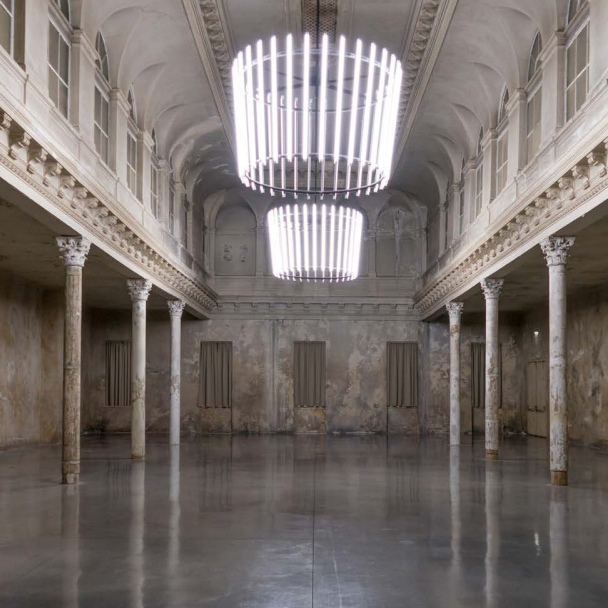
📍 Where? Organized by McNeel Europe, ATP and Bollinger+Grohmann at Reaktor
Looking for a day packed with innovation, creativity, and hands-on action? Join us for the Rhino User Meeting in Vienna and dive into the latest and greatest in Digital Design and Fabrication.
Here’s the deal:
👉 Learn from industry pros in Architecture, Design, Engineering, Fashion Design & Accesories, 3D Printing, Robotics, AI and more!
👉 Discover cutting-edge updates on Rhino Beta, Grasshopper, and other tools.
👉 Check out live demos and get inspired by exhibitors showing off what’s possible.
💡 Bonus? It’s not just all tech talk—there’s networking and drinks to wrap up the day! Perfect for meeting like-minded folks and making connections.
🎟 Tickets (click on the link to buy):
🚀 Interested in exhibiting? Drop an email to carlos@mcneel.com.
Check out what went down at past events: https://events.mcneel.eu/
Mark your calendar—we’ll see you there!
#rhino3dvienna2026
—————————————————————————————————————————————————
Bonus: GCD Symposium 2026 (Symposium on Geometry and Computational Design) – Nov 27, TU Wien
On the next day (Nov 27), our friends from TU Wien, Uni Innsbruck and TU Graz have organized the “Symposium on Geometry and Computational Design” at the Kuppelsaal, TU Wien. Complete info and free registration…
SPEAKERS

Verena Vogler
bio
Verena Vogler leads the R&D team and the programming curriculum at McNeel Europe. She holds a Diploma (Leipzig University of Applied Sciences) and a Master’s in Architecture and Computational Design (IaaC), and earned her doctorate in Engineering from the Chair of Computer Science in Architecture at Bauhaus University Weimar.
Matthew Tam
bio
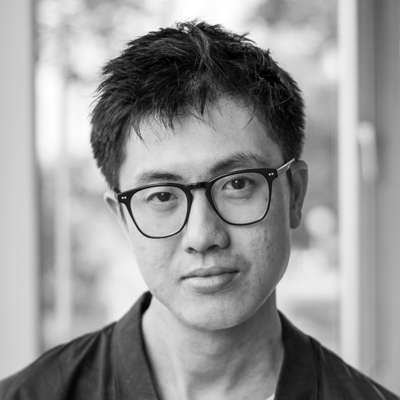
Matthew Tam is a computational designer based in Vienna with a background in architecture, working at the intersection of architecture, structure, and geometry. Since joining Bollinger+Grohmann in 2012, he has contributed to a wide range of complex projects, including the award-winning Rozelle Interchange in Sydney, Shanghai Expo Cultural Park, and ESO Supernova in Munich. He currently co-leads the Design Technology Group at Bollinger+Grohmann and additionally serves as Operations Manager at Karamba3D, supporting the development of the fully parametric FEM Software.
Dr.-Ing. Milos Dimcic
bio
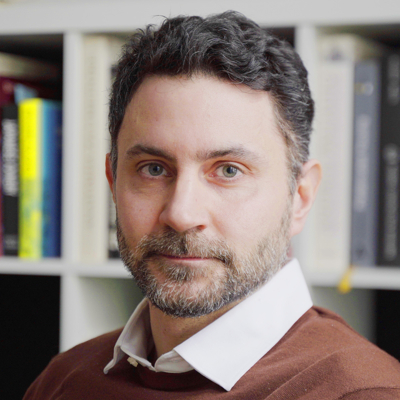
Computational designer and engineer working at the intersection of AI, architecture, and material reality. PhD from the University of Stuttgart (ITKE), with 20 years of practice spanning iconic structures, sustainable materials research, and robotic production systems.

David Rutten
bio
Grasshopper Lead Developer.

Anna Heimrath
bio
She leads a cross-office planning department and is a certified BIM Manager at Bollinger+Grohmann.
Drawing on many years of experience as a Modeler and BIM Manager, she coordinates projects from planning phase through to construction, ensuring efficient and goal-oriented collaboration among all project stakeholders. As a mentor and strategic project partner, she supports internal project teams in the coordination, alignment, and implementation of complex planning processes, making a significant contribution to the quality, efficiency, and innovative strength of each project.

Evy Slabbinck
bio
With a background in architectural and structural engineering, Evy has worked across research and practice: from the University of Stuttgart’s ITKE to leading engineering firms including Bollinger + Grohmann and Teuffel Engineering Consultancy. Her expertise spans computational design, timber construction, parametric workflows and advanced fabrication.
Alongside her technical work, Evy completed an MBA focused on leadership and sustainability, reflecting her passion for shaping not only how we build, but how we lead. She is also the founder of HerTableTalk, an initiative that champions women in engineering and construction through mentoring, education and community building.

Pierpaolo Ruttico
bio
Pierpaolo Ruttico is an architect-engineer and researcher at Politecnico di Milano, specializing in complex constructions and advanced production processes. He previously worked in New York City for Pelli Clarke & Partners, then earned a Ph.D. in Building Engineering, with a specialization in non-standard geometries. He is the founder and director of INDEXLAB, a multidisciplinary research group established in 2010. INDEXLAB focuses on contemporary architectural languages and pioneers innovative processes in digital fabrication, robotics, and machine learning.
Michele Blasili
bio
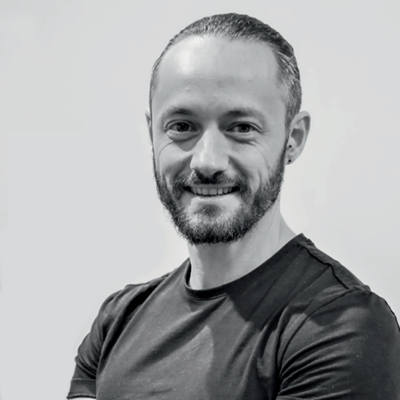
Former Senior Lead Technical Designer at Swarovski and Authorized Rhinoceros Trainer.

Iliana Papadopoulou
bio

Carlos Pérez Albà
bio
Carlos Pérez Albà (Barcelona, 19th March 1975) is currently the EMEA Sales, Marketing and Business Development Manager at McNeel.
Studied Economics (Universitat de Barcelona, Otto-Friedrich Universität Bamberg), Illustration (Massana Art School Barcelona) and Management (IESE Business School Barcelona).
https://www.linkedin.com/in/carlosperezalba/ www.mcneel.com www.rhino3d.com www.food4rhino.com
Junghwo Park
bio

Alexander Kindlen
bio
Milena Stavric
bio
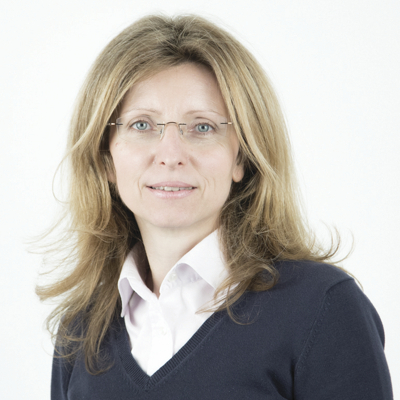
Assoc. Prof. Dr. Milena Stavrić is an Associate Professor of Architectural Geometry and Digital Design at Graz University of Technology (TU Graz), Austria, where she leads the ShapeLab research group at the Institute of Architecture and Media. Her research focuses on computational design, architectural geometry, digital fabrication, and material-informed design processes. She explores the integration of parametric modelling, robotic fabrication, and additive manufacturing, with a particular emphasis on sustainable materials and innovative architectural applications. Through interdisciplinary research projects, she investigates how digital design tools, including Rhino and Grasshopper, can connect complex geometries with material behaviour and real-world fabrication, bridging the gap between computational design and built architecture.
Ljuba Tascheva
bio
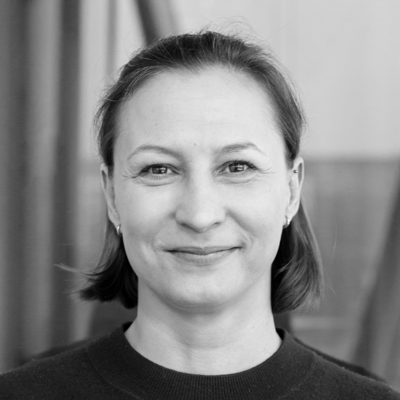
Ljuba Tascheva joined Bollinger+Grohmann in Frankfurt in 2011 as a computational designer working at the interface between architecture and structural engineering. She leads the interdisciplinary Design Technology Team in Germany, which provides the technological foundation for all services and expertise of the firm. Ljuba is also part of the core team shaping and implementing Bollinger+Grohmann’s digital transformation strategy. Since 2023, she is co-organising the Design Technology Meet-ups in Frankfurt, a regular interdisciplinary forum for exchange on digital methods in AEC. Before joining Bollinger+Grohmann, she studied Architecture with a focus on experimental and digital design and construction, as well as Design Research, at the University of Kassel.
Konstantina Angeletou
bio

Viki Sandor
bio
Viki Sandor is an architect and researcher working at the intersection of design, technology, and urban systems. Currently she is a research engineer at the Austrian Institute of Technology and a lecturer at the University of Innsbruck. She earned her Master’s degree in architecture at the University of Applied Arts Vienna in 2017. She then worked as a Geometrist at Studio Olafur Eliasson and taught design studios and workshops on computational design and visual storytelling. She has been part of several research consortia focusing on computational design, machine learning, and the co-design of sustainable urban space. Her current work explores early-stage design processes that integrate environmental, mobility, and spatial intelligence. She is also drawn to questions of co-creation and co-design: how to move away from rigid methodologies and create frameworks that bring people closer to each other and to the spaces they inhabit.

Clemens Preisinger
bio
Clemens Preisinger, D.I. Dr. is a structural engineer and researcher. He started his career as a researcher at the Institute for Structural Concrete at the Technical University Vienna. Since 2008 Clemens is working for the structural engineering company Bollinger+Grohmann. During that time, he contributed to several research projects at the University of Applied Arts Vienna. There he currently heads the department ‘Digital Simulation’ which investigates possibilities to bring computational modelling techniques into early-stage architectural design. Since 2010 Clemens is developing the parametric, interactive Finite Element program ‘Karamba3D’. He holds a PhD in Structural Engineering from the Technical University Vienna.
Bastian Nispel
bio
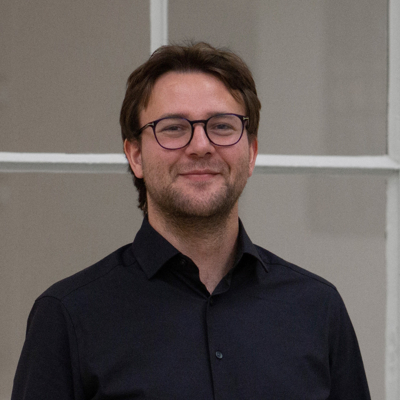
Bastian Nispel is a trained architect and self-taught web and software developer, currently serving as Team Lead Product Development at Design-to-Production in Zurich. He combines expertise in architecture, DfMA, and software development to help timber contractors and construction companies develop scalable building systems and digital configurators. His work focuses on translating complex design and manufacturing processes into efficient, automated workflows that enable businesses to standardize their products, increase productivity, and scale their operations.

Gianmarco Paglierani
bio
Gianmarco Paglierani is Project Manager and Head of Computational Design at DMAA (Delugan Meissl Associated Architects) in Vienna. He works where design meets technology: parametric strategies, digital models, simulation, automation and digital fabrication, carried from first concept to construction. Shaped by years of practice across Europe, he is interested in one question above all: how data can change the way architecture is designed, coordinated and delivered.

Yichen Lu
bio
Yichen Lu is a senior architect at Coop Himmelb(l)au in Vienna, working at the intersection of architectural design and computation. Her path is interdisciplinary: a bachelor’s degree in Geography, followed by architecture studies at the University of Applied Arts Vienna and the master’s in Advanced Computation for Architecture and Design (MaCAD) at IAAC in Barcelona. Her practice explores how digital tools can turn creative ideas into spatial form, and she is particularly interested in AI and data-driven approaches to architecture and urban design. She co-authored “Walkwise: A Data-Driven Urban Design Evaluation Tool for Assessing Walkability Using 5D Criteria,” published in the proceedings of Responsive Cities 2025: Design Matter(s) for Decarbonization.

Lila Rossi
bio
Lila Rossi is an architect and Lead of Digital Technologies at ATP architects engineers. With an international background in architecture and computational design, she focuses on integrating digital technologies, parametric design, BIM, automation, and AI into architectural practice. She founded and led ATP’s Computational Design Team, bringing together specialists across multiple locations. Her work focuses on bridging the gap between design, technology, and practice, fostering collaboration, knowledge sharing, and innovation across disciplines.
Pablo López de Uralde Montes
bio
Pablo is a Computational Design Specialist at ATP Architects Engineers and an External Lecturer at the University of Innsbruck. As part of ATP’s Computational Design Team, he develops digital workflows, design automation tools, and computational solutions that support architects and engineers across the ATP Group. With a background in architecture, his professional and academic work focuses on the convergence of design, technology, and making, with a strong interest in interdisciplinary collaboration and experimentation.

Malcolm Unger
bio
Malcolm Unger is a Computational Designer at ATP architects engineers in Vienna. Having joined ATP’s Design and Research Team in Frankfurt in 2024, he is now a permanent member of ATP’s Computational Design Team, where he develops scalable digital workflows and computational solutions for complex design challenges using Rhino, Grasshopper, Python and BIM-oriented processes. He studied architecture at TU Darmstadt, where he worked at the Digital Design Unit, taught the fundamentals of Rhino and Grasshopper as a tutor, and co-organized BE-AM, the annual symposium on Building Environment Additive Manufacturing in Frankfurt.

Ana Ascic
bio
Ana Ascic is an architect and computational designer working at the intersection of material intelligence, computational design and digital fabrication. At Blumer Lehmann she leads computational workflows for complex timber geometries in the Advanced Geometry group, taking freeform projects from parametric planning and structural data integration to fabrication-ready models, and exploring how large language models can turn project-specific solutions into adaptive, reusable tools. Trained in Zagreb, Madrid (UPM) and Zurich (ETH, MAS Architecture and Digital Fabrication), her research spans robotic 3D printing of clay, multimodal AI for human experience, and AI-assisted timber joinery. With Maria Smigielska she created Liquid Clay: Forms in Flux, shown at Design Biennale Zurich 2025. She curated the Future of Timber Rhino User Meeting 2025 at Blumer Lehmann, is active in the Zurich CAD+AI Meetup, and co-organised the programme on AI, design and manufacturing at Zurich Design Weeks 2026.

Martin Schulte
bio
Martin Schulte joined Herzog & de Meuron in 2016 as an architect and computational designer. He became part of the Design Technologies department in 2019 and has led the Computation team since 2022. He has worked on a variety of projects requiring computational design expertise, such as football stadiums, museums and hospitals. Beyond his involvement in architectural projects, he has a strong focus on applied research into new technologies and currently leads the office-wide AI transformation. As part of this work, he collaborates closely with academia and the software industry.
Alexander Figl
bio
I am Alex, Co-Founder of Foundation Three. We are an interdisciplinary designstudio focused on holistic design approch. Our Services range from architecure over graphicdesign and contetn production. I studied architecture at TU Vienna and did my Masters at university of applied arts vienna.

Naomi Neururer
bio
Naomi Neururer is a Vienna-based architectural designer and researcher. She holds a Master’s degree in Architecture from the University of Applied Arts Vienna, where she currently works on the artistic research project “Inventorics”, funded by the Austrian Sience Fund (FWF), PEEK Program. Her work explores the intersection of computational design, digital fabrication, material experimentation, and circular design. Alongside her research, she is the co-founder of NOJ motion, a creative studio specializing in 3D design, visualization, and animation.

Marina Smirnova
bio
I’m Marina Smirnova, an Architect, Computational designer and PhD candidate at Télécom Paris with a background in architectural practice. My research is part of the In-and-Out project, which explores how spatial cognition can inform the integration of indoor and outdoor spatial computing. I focus on human–building interaction, wayfinding, and computational methods for evaluating spatial experience, bringing an architectural perspective to how people perceive and navigate built environments.
PROGRAM (click here)
LOCATION
EXHIBITORS

Raven

ShapeDiver

Rendair

Termite
Termite synchronizes with local CAD software to read geometries and design constraints, allowing architects to explore layout variations while staying connected to their existing design tools and workflows.

ANT

KeyShot
KeyShot gives design, engineering, and marketing teams one platform to visualize products in 3D, from early concept to final marketing image.

A-NULL
A-NULL Bausoftware GmbH is the reliable training partner for the AEC industry. Whether Rhino, BIM, Archicad, Solibri or Simplebim – A-NULL offers a wide range of courses, consulting and individual support for BIM projects as well as suitable planning software.